Your CEO Announced an AI Mandate. Now What?

Workera Team
Workera Team
2025 was the year of the AI mandate.
Leading global organizations are increasingly mandating AI readiness. From corporations like L’oreal, Microsoft and consumer goods giant Colgate-Palmolive, to government agencies, CEOs and leaders across all business functions now expect every employee to integrate AI tools and workflows into their daily work. This widespread adoption signals a clear trend: organizations that systematically embrace AI as a core strategic capability will continue to develop a competitive advantage over those that don’t.
AI is transforming how every industry operates, from manufacturing to retail to healthcare. And while a company-wide mandate doesn't make sense for every organization, it can be a powerful strategy to accelerate adoption and maximize the return on your AI investments.
However, deploying AI at your organization doesn't happen overnight; you need to take the time to prepare your workforce. Just because employees already use tools like ChatGPT outside of the office doesn't mean they have the right AI skills for their specific role and responsibilities. You need a talent strategy that defines what employees are expected to achieve with AI and provides the training and guidance required to reach those goals.
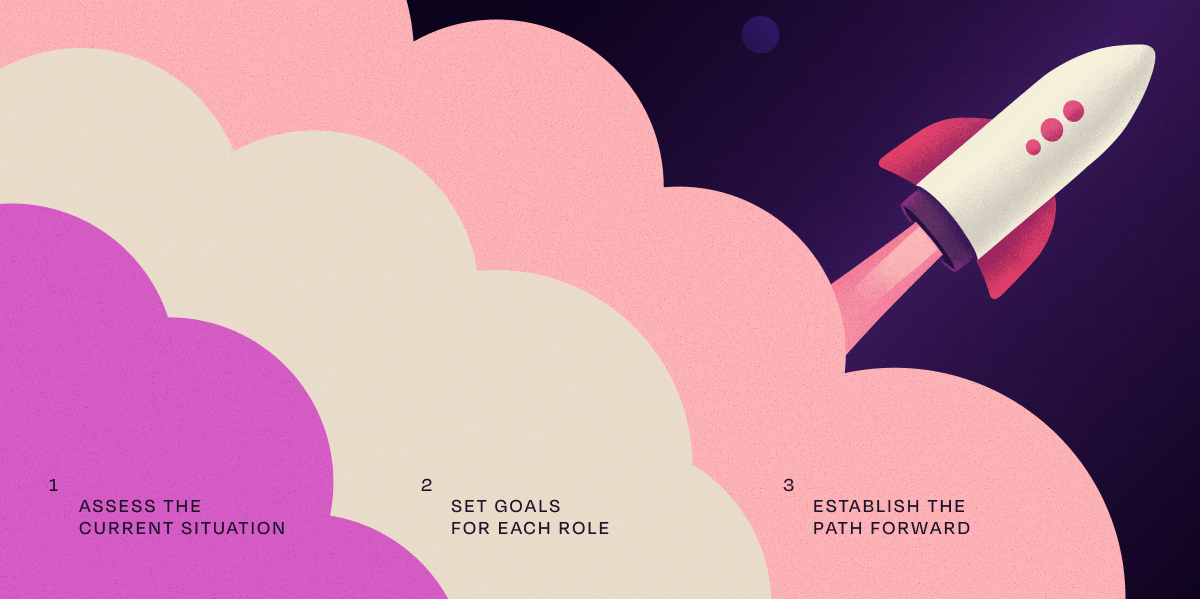
Here are three simple steps to can prepare your organization for an AI mandate.
Step 1: Assess the Current Situation
To figure out the best route to your destination, you need to know where your organization is starting from. That means assessing your employees' current skill levels and understanding where the gaps lie.
How you conduct your organization-wide assessment matters: self-evaluation delivers unreliable results, with most employees unable to accurately evaluate their current skill levels. Instead, you need accurate skills measurements that tell you exactly where your organization stands. Since employees are most likely to underestimate their abilities, you might find you're starting from a stronger position than you anticipated.
Skills assessments reveal which AI tools your employees are already familiar with and how well they can leverage their capabilities. You can also find out whether employees have verified skills in other areas that are relevant to how you're using AI at your organization. Strong skills in some areas can be highly correlated to skills in other areas, which will provide useful signals for your overall talent strategy.
While initial skill levels are important, it's the speed at which your employees and organization acquire new skills that determines long-term success. A company with less-skilled employees but a strong skill growth velocity will quickly overtake competitors starting out with higher, but stagnating, skill levels.
Step 2: Set Goals for Each Role
The transformative impact of AI means every employee will soon become an AI-enabled employee.
In many cases, employees will become “AI+X employees” — pairing specific subject matter expertise with AI proficiency. For example, strong AI skills allow a marketing professional to analyze campaign data more efficiently and identify hidden trends. An AI-enabled accountant that knows how to automate routine tasks will be more productive than an accountant who hasn’t adopted AI.
Remember: not every employee needs to be a data scientist for your AI strategy to succeed. In fact, focusing on technical AI skills can be counterproductive for employees who use AI primarily for tasks such as ideation or editing. Expectations should be tailored to each role, and talent leaders should work with business unit leaders to set ambitious but reasonable goals for every employee. If you're not sure what those goals should be, you can rely on benchmarks to help you understand what good and what best-in-class look like.
Step 3: Establish the Path Forward
Once you’ve assessed baseline skill levels and set goals for each employee, you're ready to prescribe learning pathways.
Self-guided learning is inherently ineffective. Today's learners have access to an overwhelming amount of educational materials and, without clear guidance, they struggle to identify which skills to study and in what order. Maintaining motivation is also a challenge when learning lacks structure, goals, and a way to measure progress.
In contrast, Workera's AI agents automate program design and provide each employee with personalized recommendations. Following a tailor-made plan allows employees to focus on the skills that matter most to their role and avoid spending time on those they don't need or have already mastered. Our AI continually learns from user interactions, meaning your skills programs become more accurate and effective over time.
Workera delivers the learning experience your employees need to upskill successfully. Our intuitive platform makes it easy and rewarding for learners to develop the skills they need for their role. Employees can see what they'll be working on at each stage and track their achievements as they move through their personalized program. Workera is trained on your organization's goals and documentation, ensuring employees receive the training they need to excel in their role and drive better business outcomes.
Measure, Learn, Measure Again
Learning and upskilling don't have an endpoint. The half-life of skills is shrinking rapidly, and the tools and knowledge employees need to succeed in their roles are constantly evolving. By creating a cycle of assessment, learning, and reassessment, you can provide talent leaders with accurate, up-to-date information on your employees' abilities. That information is crucial to making smart hiring decisions and assigning the right people to the right projects.
Assessment cycles keep employees on track by providing regular feedback and goal-setting opportunities. Individual employees advance faster, and the workforce as a whole benefits from upgraded skills and capabilities. Crucially, assessment cycles provide regular checkpoints, keep teams aligned with strategic goals, and give direction to your AI mandate.
If your organization is considering an AI mandate, you need to start with verified skills intelligence. Book a demo to find out how Workera can help prepare your employees and set your organization up for success.
Category
Blog
Trending Updates
Blog
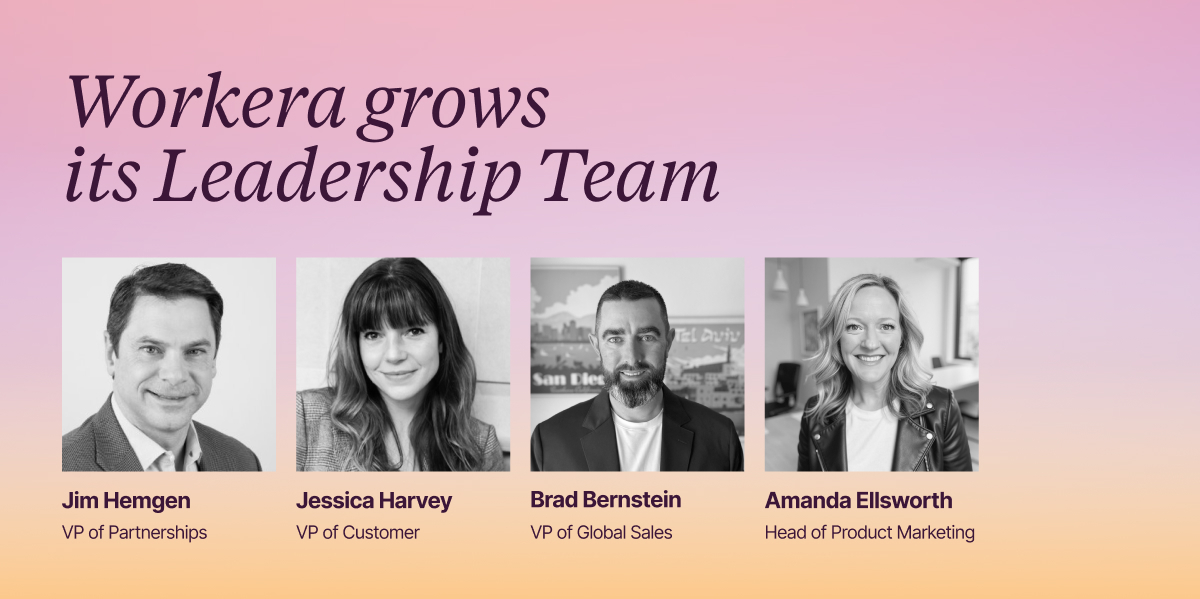
Workera Adds Executive Leaders as Enterprise Demand for Verified Skills Data Surges

Blog
U.S. Space Force Taps Workera to Build the Nation's AI-Ready Space Workforce
Blog
76% of Americans Plan on Learning New AI Skills in 2026, Workera Report Finds